
Call us now
07971190170
Glassy Quartz
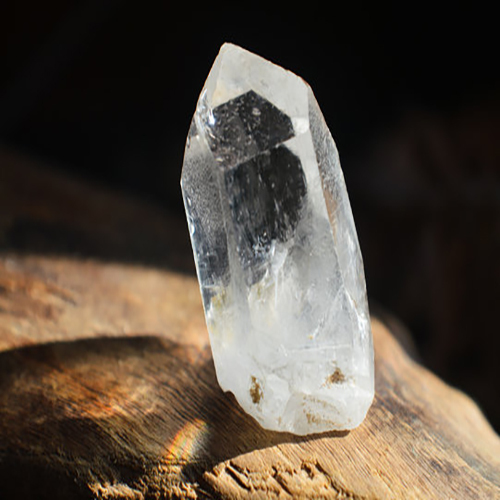

Glassy Quartz Specification
- Melting Point
- 1713 C
- Application
- Industrial
- Purity(%)
- >99%
- Surface Finish
- Smooth, vitreous
- Usage & Applications
- Used in glass production, refractory bricks, electronic-grade applications, optical components
- Density
- 2.65 Gram per cubic centimeter(g/cm3)
- Water Absorption
- ~0.01%
- Form
- Solid, crystalline
- Hardness (%)
- 7 (Mohs scale)
- Chemical Composition
- SiO2 (Silicon Dioxide) - typically >99%
- Product Type
- Refractories
- Types of Refractories
- Basic Refractory
- Shape
- Granules, lumps, or powder
- Porosity
- Low
- Dimensional Stability
- Reversible
- Strength
- High
- Specific Gravity
- 2.65 g/cm3
- Thermal Conductivity
- Low (1.4 W/mK at 20C)
- Color
- Glassy white, transparent to translucent
- Thermal Expansion
- 5.5 107 /K
- Particle Size
- Customizable as per requirements
- Acid Resistance
- Excellent; inert to most acids except hydrofluoric acid
- Alkaline Resistance
- Good
- Electrical Resistivity
- 1016 cm (at 25C)
- Refractive Index
- 1.458
- Transparency
- High optical clarity
- Loss on Ignition
- <0.1%
Glassy Quartz Trade Information
- Minimum Order Quantity
- 100 Kilograms
- Payment Terms
- Cash in Advance (CID)
- Supply Ability
- 5000 Kilograms Per Month
- Delivery Time
- 7 - 10 Days
- Main Export Market(s)
- Western Europe, Eastern Europe, Asia, North America, Africa, Middle East, Australia, South America, Central America
- Main Domestic Market
- All India
About Glassy Quartz
Glassy quartz is a transparent or translucent variety of quartz, characterized by its high gloss and smooth, glass-like finish. Composed primarily of silicon dioxide, it is valued for its hardness, clarity, and durability. This quartz is processed through cutting, polishing, and sometimes heat treatment to enhance its clarity and brilliance. Glassy quartz is widely used in jewelry, watches, and decorative items, offering both beauty and strength. It is also used in electronics and optical equipment, benefiting industries like manufacturing, design, and technology by providing reliable, long-lasting materials with excellent aesthetic qualities.
Exceptional Chemical Purity and Stability
Crafted with a chemical composition of over 99% silicon dioxide, Glassy Quartz ensures consistent performance in challenging environments. Its resistance to most acids and low porosity make it reliable for refractory and electronic applications, while reversible dimensional stability supports repeated use under varying conditions.
Versatile Applications Across Industries
Glassy Quartz is widely used in manufacturing glass, producing refractory bricks, and creating optical and electronic components. Its smooth, vitreous surface, customizable particle sizes, and high melting point support diverse industrial needs from electronics to glass foundries.
FAQ's of Glassy Quartz:
Q: How can Glassy Quartz be used in industrial processes?
A: Glassy Quartz is highly valued in industrial processes such as glass manufacturing, producing refractory bricks, creating electronic-grade materials, and fabricating optical components due to its high purity, chemical inertness, and exceptional thermal and dimensional stability.Q: What are the benefits of using Glassy Quartz over other materials?
A: The main benefits include its high optical clarity, superior acid resistance (except against hydrofluoric acid), low water absorption, and high strength. Its customizable particle size and smooth surface also allow greater adaptability in various manufacturing processes.Q: When should Glassy Quartz be preferred in refractory applications?
A: Glassy Quartz should be chosen when high temperature resistance, chemical inertness, and dimensional stability are required, especially in basic refractory environments where these properties ensure longevity and structural integrity.Q: Where are the main sourcing and supply regions for Glassy Quartz?
A: Glassy Quartz is widely sourced, processed, and supplied by manufacturers, exporters, and traders across India, ensuring consistent quality and reliable delivery to industrial customers nationwide and globally.Q: What is the typical process for customizing the particle size of Glassy Quartz?
A: Particle size customization typically involves mechanical crushing, grinding, and sieving processes. Manufacturers adjust these processes based on client specifications to deliver granules, lumps, or powder with the desired consistency and distribution.Q: How does Glassy Quartz benefit electronic applications specifically?
A: Due to its high electrical resistivity (1016 cm at 25C), low thermal conductivity, and high purity, Glassy Quartz is favored in electronic-grade applications where insulation, chemical stability, and thermal performance are critical.Q: What makes Glassy Quartz suitable for use in optical components?
A: Glassy Quartz exhibits a high refractive index and exceptional transparency, making it ideal for optical components where clarity, precision, and minimal distortion are required.- Minimum Order Quantity
- 100 Kilograms
- Supply Ability
- 5000 Kilograms Per Month
- Delivery Time
- 7 - 10 Days
- Main Domestic Market
- All India
- Main Export Market(s)
- Western Europe, Eastern Europe, Asia, North America, Africa, Middle East, Australia, South America, Central America
 Get Latest Price
Tell us about your requirement

Price:
Quantity
Select Unit
- 50
- 100
- 200
- 250
- 500
- 1000+
Additional detail
Mobile number
Email

More Products in Quartz Lumps Category
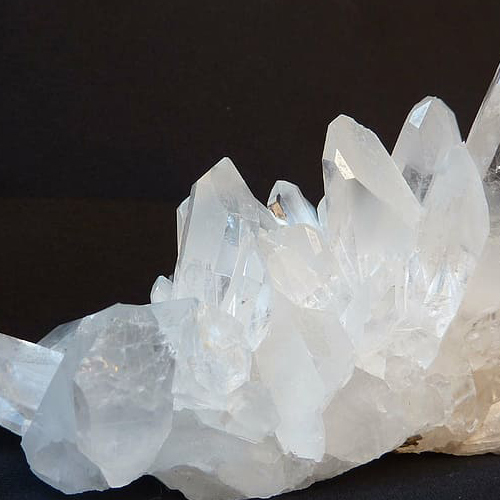
High Solid Semi Glassy Quartz
Minimum Order Quantity : 100 Kilograms
Application : Industrial
Strength : High
Shape : Other, Granular
Color : White
Specific Gravity : 2.65
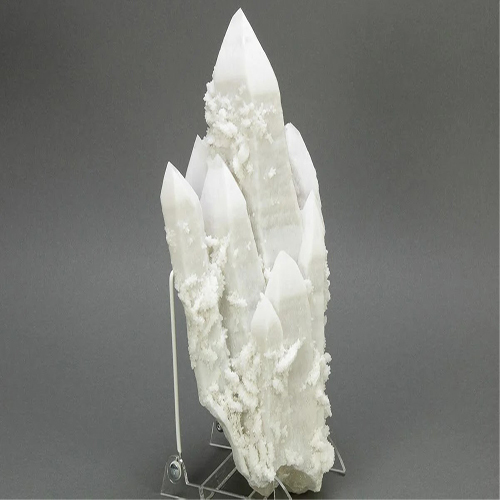
Milky Quartz
Minimum Order Quantity : 100 Kilograms
Application : Industrial
Strength : High
Shape : Other, Lumps, Granules, Powder
Color : Milky white
Specific Gravity : 2.65
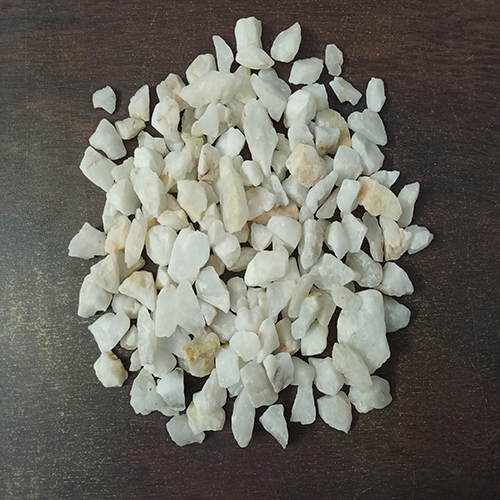
White Granular Quartz
Minimum Order Quantity : 100 Kilograms
Application : Industrial
Strength : High
Shape : Other, Granular
Color : White
Specific Gravity : 2.65
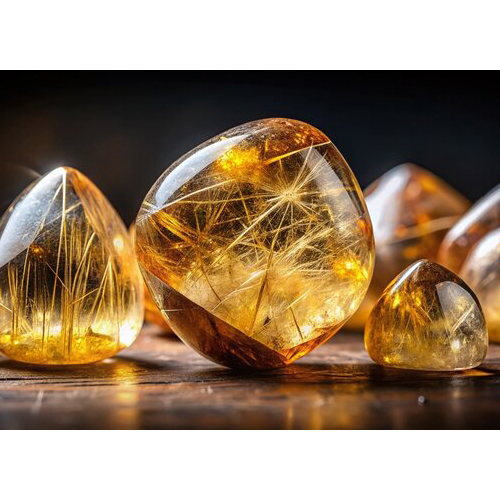
Rutile Quartz
Minimum Order Quantity : 100 Kilograms
Application : Industrial
Strength : High
Shape : Other, Lumps, loose stone
Color : Transparent with golden to reddishbrown needlelike inclusions
Specific Gravity : 2.62 2.65

GOLD BUCK TRADERS & GOODS
GST : 08BLKPK1478C1Z3
GST : 08BLKPK1478C1Z3
|


Ward No. 1, Chanderiya Road,Chittorgarh - 312021, Rajasthan, India
Phone :07971190170
 Send Inquiry
 Send Inquiry
 Send SMS
GOLD BUCK TRADERS & GOODS
All Rights Reserved.(Terms of Use)
Developed and Managed by Infocom Network Private Limited.
Developed and Managed by Infocom Network Private Limited.

